Where Is Wine Country in California and Why Is Santa Barbara So Special?
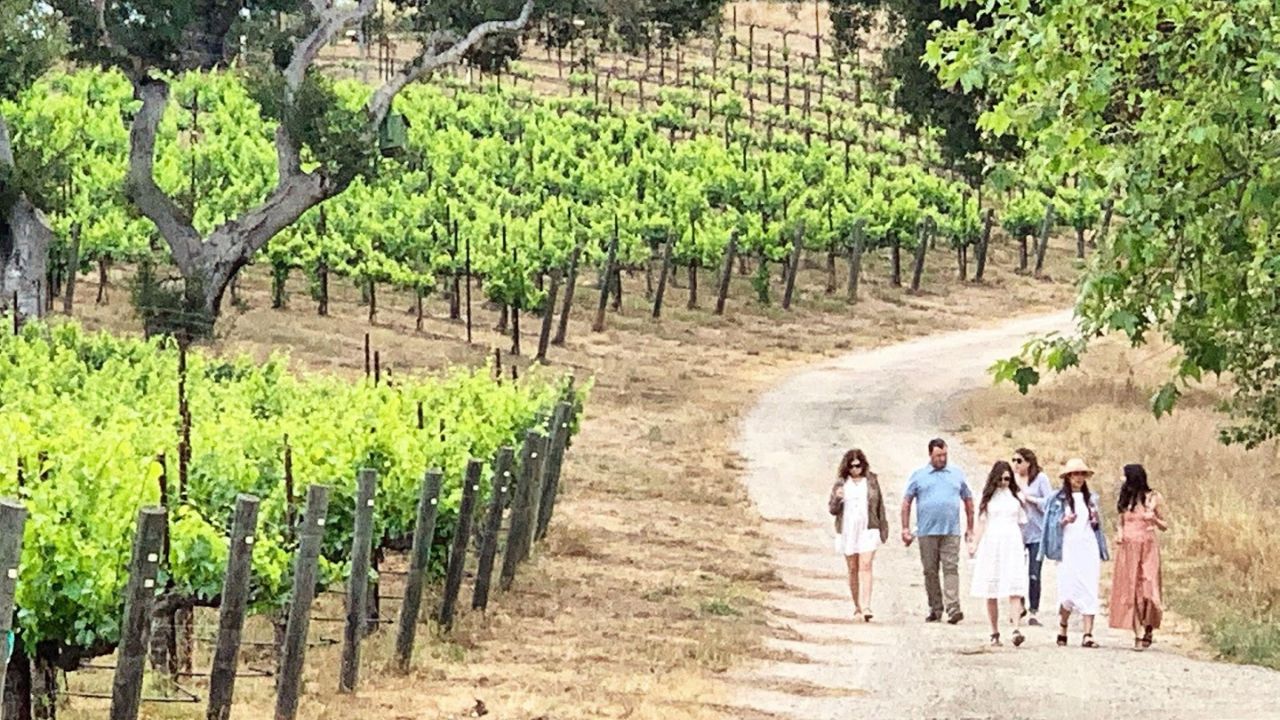
Ask someone, “Where is wine country in California?” and they’ll almost certainly say Napa Valley. Maybe even Sonoma. And sure, those answers aren’t wrong. But they’re incomplete. Because California’s wine world stretches across the entire state in ways that most people genuinely never discover, and one region in particular keeps earning quiet, passionate devotion from the people who actually know wine. That region is Santa Barbara.
Before getting into why Santa Barbara deserves its own spotlight, it helps to understand the full picture of where California’s wine country actually lives.
California Wine Country: It’s Not Just Napa
California produces nearly 30 percent more wine than the entire country of Australia, and accounts for 90 percent of all wine produced in the USA. If California were a separate nation, it would rank number four worldwide in total wine production. That scale is hard to wrap your head around. And the state breaks down into four primary wine-producing regions: the North Coast, Central Coast, Central Valley, and South Coast.
Here’s a quick breakdown of each:
| Region | Key Areas | Notable Grapes |
| North Coast | Napa Valley, Sonoma, Mendocino, Lake County | Cabernet Sauvignon, Pinot Noir, Chardonnay |
| Central Coast | Paso Robles, Santa Barbara, Monterey | Syrah, Zinfandel, Pinot Noir, Chardonnay |
| Central Valley | Sacramento, San Joaquin, Fresno | Bulk production, all major varieties |
| South Coast | Temecula Valley, Malibu, San Diego | Bordeaux blends, Zinfandel |
The North Coast is where the famous names live. Napa has over 600 wineries and 16 different AVAs (American Viticultural Areas), while Sonoma has 13 AVAs and more than 500 wineries. These two dominate the conversation. But here’s a fact that surprises most people: only 4 percent of California’s wine actually comes from Napa Valley. The prestige is real. The volume, not so much.
Mendocino County earned Wine Enthusiast’s 2024 America’s Wine Region of the Year, which tells you the North Coast story is more layered than just those two famous names. Further inland, Lake County has a soil profile very similar to Napa, but the increased elevation gives wines their own distinct character.
The Central Valley is California’s workhorse. While Napa accounts for less than 5 percent of total wine production, the Central Valley accounts for nearly 75 percent of all grapes used in wine production. If a bottle just says “California wine” on the label without specifying a region, that’s almost certainly Central Valley fruit.
The South Coast has quietly grown in stature. Temecula Valley, with its 35 wineries and growing reputation for wine tourism, especially stands out as an example of how Southern California has grown within the California wine industry in just the past decade.
And then there’s the Central Coast, running from San Francisco all the way down toward Los Angeles. This is where Paso Robles lives, where Monterey earns its keep, and where Santa Barbara does something genuinely unusual.
So, Where Exactly Is Santa Barbara Wine Country?
The Santa Ynez Valley is just two hours drive from Los Angeles, and from the city of Santa Barbara itself, it is a 30 to 45 minute drive. That accessibility matters. Wine lovers don’t have to choose between a big-city base and a wine country trip.
Santa Barbara County is home to 283 wineries, and seven officially recognized American Viticultural Areas: Santa Maria Valley, Santa Ynez Valley, Sta. Rita Hills, Ballard Canyon, Los Olivos District, Happy Canyon, and Alisos Canyon. Seven AVAs in one county, each producing something distinctly different. That’s not common anywhere in the wine world.
For visitors who want to ease in without renting a car, the Urban Wine Trail is a collection of over 20 tasting rooms located within downtown Santa Barbara. Primarily in the Funk Zone, allowing visitors to taste wines from across the entire county without needing to drive to the distant valleys.
The Geography That Changes Everything
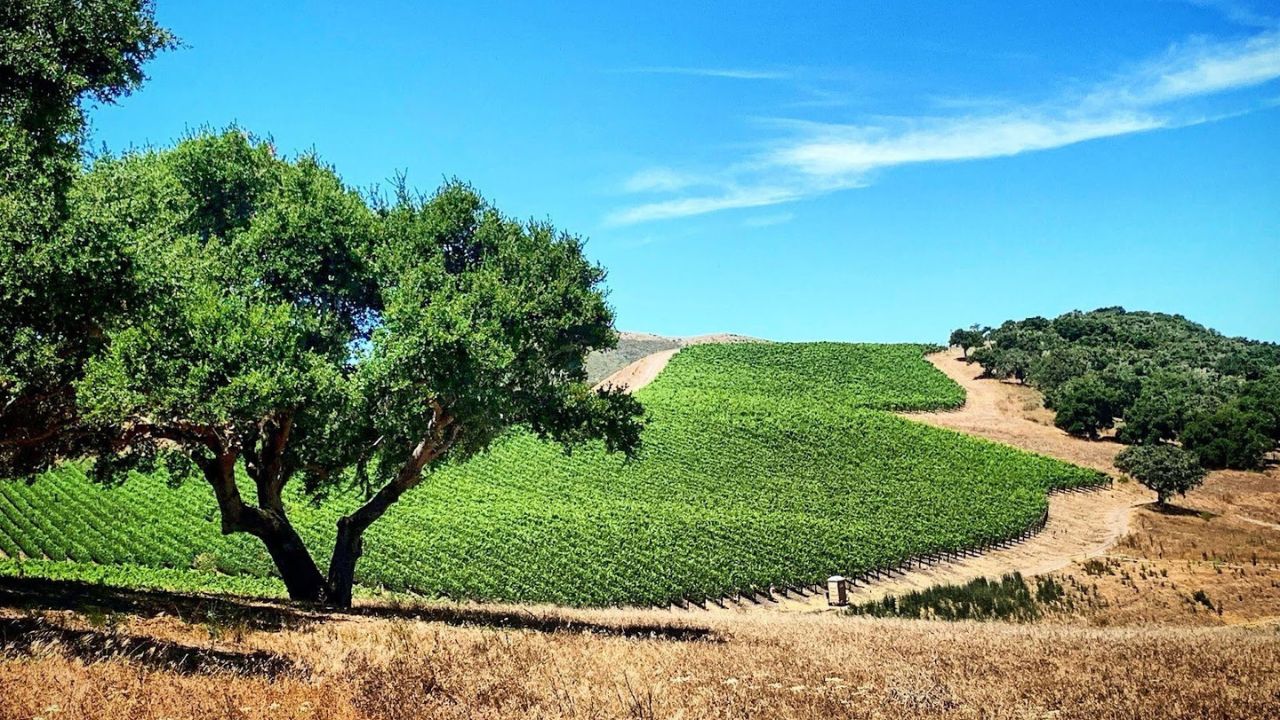
Here’s what makes wine people genuinely excited about Santa Barbara, and it comes down to geology that happened roughly 20 million years ago.
Along nearly all of North and South America’s west coast, mountains run parallel to the coastline and shield inland valleys from the cooling winds, fog, and marine layer of the Pacific Ocean. However, in Santa Barbara County, the mountains closest to the coast run east to west, perpendicular to the shore, and the valleys between these transverse ranges act as funnels rather than buffers for cold air, fog, and marine layer.
Santa Barbara County is literally “Sideways.” It is the longest east-west transverse valley found on the Americas’ Pacific coast, from Alaska to Cape Horn, with the Santa Ynez River flowing westward. That movie title wasn’t just a clever name. It was geography.
This forms a funnel effect that ushers in fog and cool maritime air from the Pacific Ocean, creating distinct microclimates that extend the growing season. The fruit has an unusually long “hang time” on the vine, allowing it to fully develop the acids, flavors, and tannins needed to produce wines of distinctive character.
The result? Santa Barbara County is home to one of the most southerly cool-climate wine regions in the Northern Hemisphere. Meaning Pinot Noir and Chardonnay can thrive at a latitude where they really shouldn’t.
Large diurnal temperature swings, with cool nights, foggy mornings, and warm afternoons, enable grapes to ripen during the day and retain acidity overnight. That balance between ripeness and freshness is exactly what makes wines from here so compelling to drink.
Seven AVAs, Seven Different Worlds
What makes Santa Barbara unusual, even among wine regions, is how much variety exists within a compact geographic footprint:
- Santa Maria Valley (northernmost, coolest): The AVA boasts a unique transverse geography that funnels Pacific fog into the region, leading to the production of cool-climate wines like Chardonnay, Pinot Noir, and Syrah. It’s also the oldest AVA in the county, established in 1981.
- Sta. Rita Hills (western, very cool): Heavily influenced by morning and afternoon fog, with sedimentary soils containing diatomaceous earth and limestone. This is where the best Pinot Noir in the county comes from. It’s stunning stuff.
- Ballard Canyon (center): Its north-south-oriented canyon creates wind and weather conditions ideal for Rhône varieties, with over 50 percent Syrah and an additional 30 percent Viognier, Roussanne, and Grenache.
- Los Olivos District: A broad alluvial terrace with a uniform consistency in geography and soil profile, rare among the county’s AVAs, where Rhône, Spanish, and Italian varietals all thrive.
- Happy Canyon (easternmost, warmest): Furthest from the ocean’s cooling reach and the premier spot for heat-loving grapes like Cabernet Sauvignon and Merlot.
- Santa Ynez Valley: The overarching AVA contains several sub-regions, with the greatest concentration of wineries in Santa Barbara County, where the climate moves from cool in the west to warm and dry inland.
- Alisos Canyon (newest, established 2020): A small AVA of just under 6,000 acres, renowned for Rhône-style varietals, especially Syrah and Grenache.
The Sustainability Angle: No Other Region Matches
This is where Santa Barbara genuinely separates itself from California’s more famous wine zones and why it’s exactly the right destination for anyone who thinks about where their wine comes from.
Sustainability matters deeply to Santa Barbara’s wine industry. Natural forces play a huge role in the winemaking process, and for many winemakers and grape growers, being eco-conscious is much more than a quality-driven or commercial concern. Their dedication to green practices is fueled by a desire to protect and preserve natural resources for the betterment of the community and future generations.
Ampelos Cellars in Lompoc became the first vineyard in the U.S. to be certified organic, biodynamic, and sustainable, integrating biodiversity by cultivating cover crops and preserving natural habitats, resulting in wines that truly reflect their terroir.
Sanford Winery in Sta. Rita Hills takes a science-based approach to sustainability, focusing on soil health, vine balance, and biodiversity across its 1,200-acre estate. With only 262 acres planted to vine and the rest preserved as natural habitat, including a 127-acre conservation easement, the winery promotes a stable ecosystem that supports long-term vineyard health.
The “Sustainability in Practice” (SIP) certification program looks at every aspect of the business, including farm labor, energy conservation, and water quality, and represents the highest level of green certification available. Multiple Santa Barbara producers hold this credential, which is not easy to earn.
Our tours are built around these same principles, and you can read more about our sustainability commitment to see how it shapes every experience.
Beckmen Vineyards is a leader in biodynamic farming, prioritizing soil health and ecosystem biodiversity. Stolpman Vineyards in Los Olivos, meanwhile, focuses on sustainable and biodynamic farming for its hand-crafted, small-lot wines. These aren’t marketing claims. These are certified, verifiable practices that show up in the bottle.
The Experience: Intimate, Accessible, and Genuinely Fun
Beyond the science and the soil, there’s a mood to Santa Barbara wine country that feels different from Napa. Santa Barbara wine country offers a rare combination of exceptional wines, stunning landscapes, and accessible experiences without the crowds and pretension found in some wine regions.
What makes tours here unique is their focus on small, family-owned vineyards and boutique wineries that produce limited-batch wines. Visitors get to meet the winemakers and taste wines straight from the source. That personal touch isn’t marketing fluff. It’s just how things work here.
For those looking to go deeper, a private wine tour with Sustainable Wine Tours puts guests at the winemaker’s table, with tastings designed entirely around their preferences and no shared tasting room in sight.
Private vineyard walks, behind-the-scenes production facility visits, and seated private tastings, often with the winemakers themselves rather than standing at crowded tasting room bars, are genuinely part of what’s available, particularly through tour operators focused on sustainable producers.
And the food isn’t an afterthought either. Los Olivos, Solvang, and the Funk Zone in Santa Barbara proper have all developed serious culinary identities that complement the wine beautifully. To secure your own seated tasting with the winemaker, reserve a private tour here.
The Urban Tasting Scene
One of the coolest parts of Santa Barbara wine culture is the Funk Zone. It is located right in downtown Santa Barbara, just blocks from the beach.
Years ago, this area was full of warehouses and surf shops. Now, it is a dense collection of tasting rooms, art galleries, and craft breweries. One can walk from place to place, tasting wines from all over the county without ever needing a car. It is casual. It is vibrant. And it lacks the pretension that often haunts more traditional wine regions.
One might spend the morning surfing at Leadbetter Beach and the afternoon sipping a world-class Chardonnay in a converted warehouse. That is the Santa Barbara lifestyle. It is a mix of high-end quality and low-key vibes.
What to Expect When Visiting
Planning a trip to California wine country can be overwhelming because there are just too many options. But if the goal is to find a place that offers diversity, beauty, and a genuine connection to the land, Santa Barbara is the clear winner.
The scenery is stunning. On one side, there are the Santa Ynez Mountains, and on the other, the Pacific Ocean. The drives between vineyards take you through rolling hills dotted with ancient oak trees and grazing horses. It looks like a painting.
But it is also important to remember that wine tasting here is an experience, not a race. Most places require reservations now, which is actually a good thing. It means the staff have time to talk to guests and explain what is in the glass.
For the ultimate hassle-free visit, complete with luxury transportation, discover what we offer.
Final Thoughts on the California Space
So, where is wine country in California? It is everywhere. But if someone wants to see the future of American wine, they need to look at the Central Coast.
Santa Barbara is special because it refuses to be just one thing. It is a place where a winemaker can produce a crisp Sparkling wine and a brawny Syrah within twenty miles of each other. It is a place where the ocean dictates the rhythm of the day.
Look, Napa will always have the fame. Sonoma will always have charm. But Santa Barbara has the soul. It is a region that prioritizes the health of the earth and the craft of the bottle. And in a world where everything feels increasingly mass-produced, that is something truly worth exploring.
Whether it is a deep dive into the limestone soils of the Sta. Rita Hills or a sunny afternoon in a Los Olivos tasting room, the experience is always grounded in something real. That is why people keep coming back. It is not just about the wine. It is about the feeling of being in a place that is perfectly in sync with nature.
One more thing to consider is the timing. While summer is popular, the “secret” season in Santa Barbara is actually autumn. The light turns golden, the harvest is in full swing, and the air is crisp. It is a fantastic time to see the vineyards in their most active state.
Regardless of when one goes, the key is to stay curious. Dig into the stories behind the labels. Ask about the soil. Drink the weird stuff that isn’t sold in grocery stores. That is how the real magic of California wine country is found.
FAQs
- Where is wine country in California located
Wine country in California spans multiple regions, including Napa Valley, Sonoma County, Paso Robles, and Santa Barbara County along the Central Coast.
- What makes Santa Barbara wine country unique
Its east-to-west valleys allow ocean air to cool vineyards, creating balanced wines with longer growing seasons.
- What wines is Santa Barbara best known for
Santa Barbara is known for Pinot Noir, Chardonnay, and Syrah, especially from cooler coastal areas.
- Is Santa Barbara less crowded than Napa Valley
Yes, Santa Barbara generally offers a more relaxed and less crowded wine tasting experience compared to Napa.