Where To Find the Best Santa Barbara Pinot Noir Beyond the Tasting Room
The tasting room is not the only way. Most people visiting Santa Barbara wine country spend their time hopping between reservation-only estates in the Santa Ynez Valley, which is still amazing. But truly great bottles can be found beyond the tasting room.
They move through mailing lists, quiet restaurant cellars, and urban tasting rooms that most visitors skip entirely. Santa Barbara County has over 275 wineries and seven federally recognized growing areas. Knowing which doors to knock on changes everything.
Santa Barbara Pinot Noir benefits from a long, cool growing season shaped by Pacific fog that rolls in off the ocean each morning, burning off by noon and giving the vines a slow, steady ripening window almost no other California region can replicate. The result is Pinot that leans toward the Burgundian end of the spectrum. More tension. More acid. Less fruit bomb. That surprises a lot of people.
So, where do you actually find it? Wine clubs, city wine bars, smart restaurants, and guided tours that unlock estates not open to the public. Start with these.
Why Santa Barbara Pinot Noir Tastes Different From the Rest of California
Most people assume Napa or Sonoma when they think of California red wine. That assumption costs them a lot of great glass.
Sta. Rita Hills lies closer to the equator than any European wine region, which should make it far too warm for cool-climate grapes. But Pinot thrives there because the valley runs east to west, pulling cold ocean air directly inland from the Pacific. It’s a geographic accident that became a competitive advantage.
The fog matters too. Sta. Rita Hills sits just 10 miles from the Pacific Ocean and receives steady afternoon winds, morning fog, and a long growing season. That combination gives the wine natural acidity and mineral structure you just don’t get in warmer inland zones. The bones of the wine are built in the vineyard, not the cellar.
Santa Barbara County earned Wine Enthusiast’s Wine Region of the Year Award in 2021, beating out spots in France, South Africa, and New Zealand. That’s not a fluke. The region has been building toward this for decades, ever since Richard Sanford and Michael Benedict planted the county’s first Pinot Noir vines in 1971.
The Two AVAs That Actually Define Santa Barbara Pinot Noir
Geography shapes flavour here more than winemaker ego. Two AVAs matter most for Pinot, and they’re genuinely different.
| AVA | Style Profile | Key Sub-Zone |
| Sta. Rita Hills | Tart red fruit, high acid, mineral edge, floral lift | Lompoc to Buellton, mostly cooler west side |
| Santa Maria Valley | Richer texture, deeper dark fruit, earthier base | Santa Maria, includes Bien Nacido Vineyard |
The Sta. Rita Hills extends from Buellton to Lompoc and follows two slim valleys, with terrain ranging from flat areas to steep hillsides and a consistent presence of calcium-rich and diatomaceous earth in the soil. That soil structure drives the mineral, salty tension in the wines. It’s the closest California gets to a Chambolle-Musigny profile without trying to copy it.
Santa Maria Valley plays the other direction. Bien Nacido Vineyard, founded in 1969 in the Santa Maria Valley and first harvested in 1973, is arguably the most storied Pinot Noir growing site in the county. Winemakers from all over California have long sourced it. The wines tend to be richer. More full-bodied. Less razor-edged than Sta. Rita Hills bottlings.
Choosing between the two isn’t about better or worse. It’s about mood.
Winery Wine Clubs: The Fastest Route to Allocated Bottles
Here’s the thing. The best bottles never reach a store shelf. They go to wine club members first. What’s left gets allocated through restaurants or mailing lists. Retail gets the rest.
Sea Smoke runs a mailing list model where most of their estate wines are carefully allocated. The estate farms 256 acres of vines biodynamically and produces about 20,000 cases annually, but demand far exceeds what trickles into open retail. Getting on their list is the play. The 2023 Southing Pinot Noir, which scored 94 points by multiple critics, is the kind of wine that disappears fast.
Sanford Winery, home to the Sanford and Benedict Vineyard where the county’s first Pinot Noir vines were planted, offers estate club access with wines focused on minimal-intervention farming. Their new winemaker brings eight years of experience from Bien Nacido. Worth tracking.
Carr Winery’s Pinot Noir Club ships six times a year and includes both current releases and library wines, which is a surprisingly good value given how hard library bottles are to find elsewhere.
Other wine clubs worth joining for Santa Barbara Pinot Noir:
- Alma Rosa (Sta. Rita Hills): Female-led winemaking, focused on El Jabali Pinot Noir from high-elevation sites
- Melville Winery (Sta. Rita Hills estate): 100% estate-grown Pinot, ships to most US states
- Presqu’ile (Santa Maria Valley): Gravity-flow winery with a strong culinary program and Pinot club shipments
- Tyler Winery: Exclusively focused on Pinot Noir and Chardonnay from hand-selected vineyards, allocation-only for their top cuvees
Wine club membership is not just about convenience. It’s the only way to access small-batch, single-vineyard Pinot Noir from producers who don’t need a retail partner to move wine.
Restaurants That Take Santa Barbara Pinot Seriously
What happens when a chef builds a menu specifically around local Pinot Noir? The pairings get very precise. The wine list gets deep. And dinner becomes worth planning a trip around.
Hitching Post II in Buellton, famous long before Sideways brought it global attention, still pours the full Hartley Ostini Hitching Post Pinot Noir range by the glass and bottle, with a tasting room next door for retail purchases.
The wine list also includes other Santa Barbara producers, but the house wine is the point. This is the place to try the whole Hitching Post lineup without committing to a case.
Los Olivos Cafe and Wine Merchant plays a dual role as a hyper-local wine shop and full-service restaurant, letting guests pull any bottle from the retail floor and drink it at the table. That’s a rare setup. Sitting in Los Olivos, surrounded by 50-plus tasting rooms within walking distance, the Cafe is a sensible base for a serious day of Pinot exploration.
Pali Wine Co. in downtown Santa Barbara’s Funk Zone pours Pinot Noir and Chardonnay with an emphasis on single-vineyard and AVA-specific bottles in a relaxed indoor-outdoor setting. Less formal than a proper tasting room. Good for a slow afternoon glass rather than a structured flight.
Toma Restaurant and Bar on the Santa Barbara waterfront carries cult-favorite Pinot bottlings like Sea Smoke on its list alongside Italian wines, which is an odd but genuinely good pairing strategy.
Where to Buy Santa Barbara Pinot Noir Without Making the Drive
Not everyone can drive the Foxen Canyon Road on a Tuesday afternoon. That’s the honest truth. Busy schedules, out-of-state visitors, and people who’ve already tasted at the winery and just want more bottles at home. These options work.
In Santa Barbara (City)
The Urban Wine Trail runs through the Funk Zone and covers 20-plus tasting rooms representing Santa Barbara County wines, several of which also sell bottles retail. Melville and Margerum both have Funk Zone tasting rooms stocked with inventories of their Pinot Noir range. No reservation required. Walk-in friendly.
Online and Retail
K&L Wine Merchants in California stocks Santa Barbara Pinot Noir from multiple producers with solid search filters for AVA and vintage. Gold Medal Wine Club, run out of Goleta, has built specific Pinot Noir clubs and ships to nearly 500,000 customers, with quarterly options focused entirely on the grape. It’s a practical way to sample the region without building a tasting room itinerary.
Wine-Searcher.com is the fastest way to locate any specific producer or vineyard designation across US retailers. Search “Sta. Rita Hills Pinot Noir” and filter by price range. The results are usually current.
What to Look for on the Label
| Label Indicator | What It Means |
| Single Vineyard Name | Wine from one specific site, most expressive of terroir |
| Sta. Rita Hills AVA | Cool-climate, high-acid profile |
| Santa Maria Valley AVA | Richer style, earthier base |
| Estate Grown | Winery controls farming decisions |
| “Clone 115” or “Pommard” | Specific Pinot Noir clones, affects texture and fruit character |
Why a Guided Tour Opens Doors That Stay Closed Otherwise
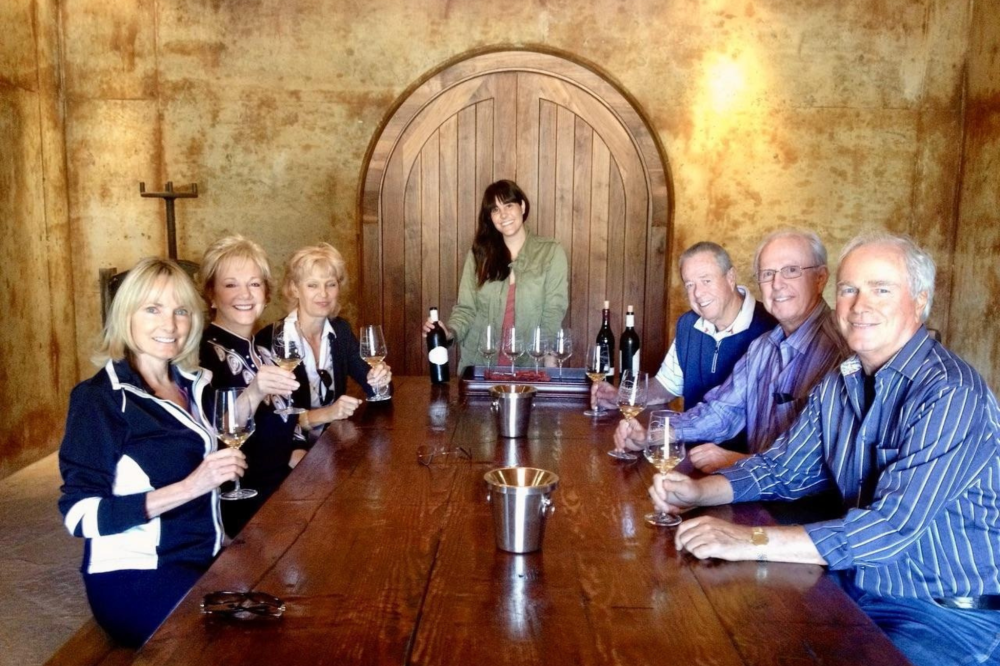
Some doors in wine country never open for walk-ins. That’s not snobbery. It’s just how small-production estates protect the quality of the visit. A 10-person barrel room can’t handle 80 visitors a day.
Sustainable Wine Tours guides groups to three wineries per day, with a focus on intimate, private access that most visitors cannot plan on their own, including direct time with winemakers and vineyard owners. Reviews consistently note the difference between a standard tasting room visit and what happens when a local expert calls ahead and opens a back door.
Sustainable Wine Tours uses an all-electric Tesla Model X SUV for up to five guests, which aligns with the wine region’s growing emphasis on sustainable farming and low-impact operations. For a region where biodynamic viticulture, organic certification, and water conservation are actual priorities, that’s consistent. Not just a talking point.
Private tours through Sustainable Wine Tours offer access to boutique wineries not open to the general public, one-on-one time with winemakers, and small-batch wines you can taste directly with the people who made them. That kind of access is genuinely hard to replicate by driving the wine road solo with a printed map.
The tour format also solves the practical problem. Nobody designates a driver in a group that’s taking Pinot Noir seriously.
Post-harvest season in November, when the fermentation tanks are still running, and winemakers are the most willing to talk, is one of the best windows for wine tours in Santa Barbara. The crowds are thinner. The access is better. Book ahead.
FAQs: Santa Barbara Pinot Noir
Q: What makes Santa Barbara Pinot Noir different from Napa Valley Pinot Noir?
Santa Barbara Pinot Noir grows in a much cooler climate. The east-west valley orientation pulls cold Pacific air inland daily, giving the wines higher natural acidity and a leaner, more mineral profile. Napa runs warmer and produces rounder, more fruit-driven styles. The two regions are doing very different things with the same grape.
Q: What is the best Santa Barbara Pinot Noir AVA for beginners?
Start with Sta. Rita Hills. The wines are structured enough to be interesting, bright enough to be easy to drink, and the AVA is specific enough that you can learn one set of flavour cues and apply them across many producers. Santa Maria Valley is worth exploring once you’ve built a reference point.
Q: Can you buy Santa Barbara Pinot Noir outside California?
Yes, but access varies. Most wineries ship direct-to-consumer to around 40-plus US states. Wine clubs like Gold Medal Wine Club handle multi-state distribution. For allocated bottles from Sea Smoke or similar producers, the mailing list is the most reliable route. Retailers like K&L Wines and Wine-Searcher-listed merchants also carry many labels.
Q: Is a guided wine tour worth it for Pinot Noir specifically in Santa Barbara?
Worth it if the goal is access. The top Sta. Rita Hills and Santa Maria Valley producers often require reservations weeks in advance, and some don’t take walk-ins at all. A tour operator with existing winery relationships gets your group into those rooms. Plus, tasting six Pinot Noirs across three producers and then driving the 101 home is a bad plan.