
Why Do Sta. Rita Hills Winemakers Actually Make Their Wine at the Lompoc Wine Ghetto?

Most Sta. Rita Hills winemakers don’t produce wine at a vineyard. They make it inside gray warehouses in an industrial park called the Lompoc Wine Ghetto. The grapes grow in one of the best cool-climate AVAs in the state. But the wine gets made a short drive away, in Lompoc, tucked behind a Home Depot off Pacific Coast Highway 1 and CA-246. And the reasons behind that choice say a lot about how great wine actually gets built in 2026.
Here is the short answer. Vineyard land in Sta. Rita Hills costs too much. Warehouse space in Lompoc does not. So winemakers buy grapes from the hills, haul them into shared spaces, and focus every dollar on what goes in the bottle. It sounds simple. That’s because it is.
How the Lompoc Wine Ghetto Started (By Accident)
Rick Longoria didn’t plan to start a wine movement. In 1998, he needed a cheaper spot to run his winery full-time. He and his wife Diana had left their day jobs the year before. Estate land was out of the budget.
So he moved into a warehouse in the Sobhani Industrial Park. The rent was low. The space was bare. And the wine was good. Other small producers noticed and followed. By the early 2000s, the industrial park had a new nickname. And a new identity.
That nickname stuck. Today the Lompoc Wine Ghetto holds over 20 tasting rooms across a four-block stretch. Labels like Flying Goat Cellars, Fiddlehead, Palmina, Ampelos Cellars, and Stolpman all operate here. Production runs small. Most makers bottle fewer than 1,000 cases a year. Some do as few as 500.
Why Not Just Build a Winery at the Vineyard?
Because it costs a fortune. That’s the blunt truth.
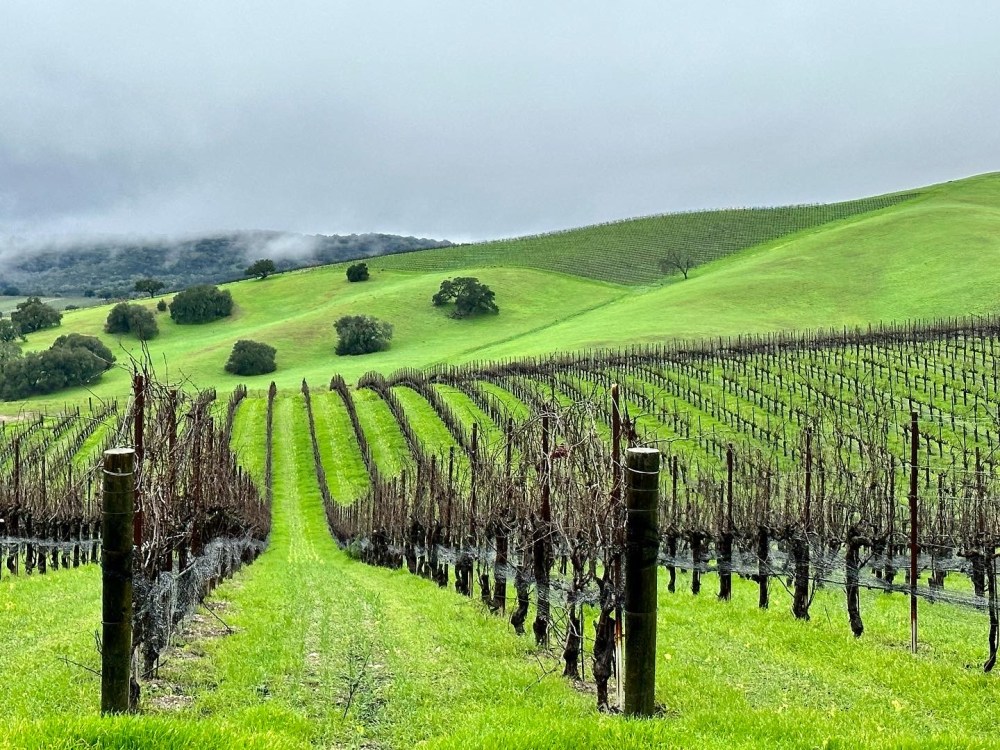
Sta. Rita Hills vineyard land is prime real estate. The AVA spans about 30,700 acres between the Santa Rosa and Purisima Hills. Only around 3,000 of those acres are planted to vine. And the soil, the fog, the ocean breeze through that rare east-west valley orientation? That terroir drives prices up.
Building a full winery on top of that land means permits, tasting rooms, staff, parking lots. For a bootstrapping winemaker producing 400 cases of Pinot Noir, that math doesn’t work.
Here is what the Lompoc Wine Ghetto gives them instead:
- Low rent: Warehouse space in an industrial park costs a fraction of vineyard-adjacent property
- Shared gear: Presses, barrel rooms, bottling lines. Split between a dozen producers, the costs drop fast
- City-owned utilities: Lompoc was the first city in Santa Barbara County to invest in green energy (geothermal and hydroelectric). Commercial electric rates here are well below the county average
- Proximity: The vineyards sit just minutes east of town along Highway 246. Grapes travel a short distance from vine to crush pad
That last point matters more than people think. Fresh-picked grapes don’t like long rides. The closer the winery sits to the vineyard, the better shape those clusters arrive in. Lompoc is right at the western edge of the AVA. So the fruit barely travels.
What Makes Sta. Rita Hills Grapes Worth All This Trouble?
Not every region earns this kind of loyalty from its winemakers. But Sta. Rita Hills is different.
The valley runs east to west. That’s unusual in California. Most valleys run north to south. This orientation creates a natural wind tunnel. Cool Pacific fog rolls in every afternoon and chills the vines overnight. Warm days, cold nights. That’s the recipe for great Pinot Noir and Chardonnay.
Sanford & Benedict planted the first vineyard here back in 1971. By 1997, winemakers like Wes Hagen, Richard Sanford, Bryan Babcock, and Rick Longoria pushed to get the area its own AVA status. That happened in 2001. And the region has kept climbing since.
| What Makes This AVA Stand Out | Detail |
| Valley orientation | East-west (rare in California) |
| Key grapes | Pinot Noir, Chardonnay, Syrah |
| Planted acreage | ~3,000 acres of 30,700 total |
| Avg. tasting room size | Small-batch, under 1,000 cases |
| Notable vineyards | Sanford & Benedict, Fiddlestix, Fe Ciega, Sea Smoke |
The grapes grown here score 91+ from critics with wild regularity. Winemakers don’t need a fancy estate to make the wine great. The fruit does most of the talking.
The Culture Inside the Ghetto (And Why It Matters)
Walk into the Lompoc Wine Ghetto on a Friday afternoon, and the vibe hits fast. No velvet ropes. No marble counters. The person pouring the wine is often the person who made it. Sometimes they’re still wearing crush-stained boots.
This is not your typical wine tasting setup. And that’s the whole draw.
The collaborative culture here is surprisingly effective. During harvest, winemakers work late nights. Having neighbors doing the same thing down the hall makes a difference. They swap advice, share labor, borrow equipment. Some have called it a “blue-collar” vibe.
That spirit shows up in the wine too. Because there’s no pressure to fill a 10,000-case quota, these producers experiment. Grüner Veltliner from a Pinot Noir region? It’s here. Biodynamic Syrah aged in concrete eggs? Also here. Flying Goat launched one of the first serious sparkling wine programs in all of Santa Barbara County from this same industrial park.
Why does that matter for visitors? Because the tasting is real. Not rehearsed. Not polished for Instagram. Just a maker, a barrel, and a glass.
The Sustainability Angle Nobody Talks About
Here is something most write-ups skip. The Lompoc Wine Ghetto is, by design, a more sustainable model of winemaking.
Think about it. Instead of 20 separate estates, each with its own power grid, water system, paved tasting area and climate-controlled barrel room, you have 20 producers sharing one complex. Shared walls. Shared infrastructure. Shared waste streams. The footprint per bottle drops fast.
Lompoc’s city-owned power comes from geothermal and hydroelectric sources. So the electricity running those barrel rooms and cold storage is cleaner than what most rural wineries pull from the grid.
And then there are the producers who go further. Ampelos Cellars was the first vineyard in the area to earn organic, sustainable, and biodynamic certifications. Chanin Wine Co. sources from organic and sustainably farmed vineyards. These aren’t token labels. These winemakers build their entire process around minimal intervention.
For anyone planning a wine tour with sustainability in mind, the Lompoc Wine Ghetto is a strong starting point. A shared group wine tour focused on small, sustainably farmed producers is a good way to see how these winemakers put that thinking into practice. The model itself is built on doing more with less.
Who Should Visit (And How to Plan It)
The Lompoc Wine Ghetto is open mostly Friday through Sunday. Some rooms open Thursday and Monday too. Most tastings are seated, small, and personal. Expect to spend 30 to 45 minutes per stop.
A few tips worth knowing before showing up:
- Call ahead: Some rooms are appointment-only, especially the smaller labels
- Start early: Doors open at 11 a.m., and the best conversations happen before the afternoon crowds
- Plan for 3 to 4 stops: More than that and the palate gets fatigued. Quality over quantity here
- Check for food trucks: Some weekends have them on-site. Otherwise, bring a snack or plan lunch in town
- Don’t skip the vineyard loop: Drive Highway 246 and Santa Rosa Road through the AVA. The views of Sta. Rita Hills vineyards are hard to beat
A guided tour makes a big difference here. Small-group or private tours with a local guide can open doors to producers who don’t advertise. Some of the best pours in the Ghetto happen behind closed roll-up doors with no signage at all.
A private wine tour of Santa Barbara with a local sommelier can get you into these spaces and introduce you to the winemakers directly.
It Predates the Funk Zone and Tin City
One more thing. The winemakers here are quick to point this out. The Lompoc Wine Ghetto came first. Santa Barbara’s Funk Zone and Paso Robles’ Tin City followed the same playbook years later. Gritty space. Low rent. Big talent. But Lompoc did it before either of those spots existed.
The name isn’t glamorous. The winemakers know that. But they also know the name fits. And the wine speaks for itself.
FAQs
What is the Lompoc Wine Ghetto?
The Lompoc Wine Ghetto is a cluster of small, independent wineries and tasting rooms inside an industrial park in Lompoc, California. It sits near the Sta. Rita Hills AVA and holds over 20 boutique tasting rooms. Most producers make fewer than 1,000 cases per year.
Why do Sta. Rita Hills winemakers produce wine in Lompoc instead of at the vineyard?
Vineyard land in Sta. Rita Hills is costly. Warehouse space in Lompoc is cheap. Winemakers buy grapes from the AVA, then crush and age them in shared industrial spaces. This keeps overhead low and lets them put more money into the wine itself.
When is the Lompoc Wine Ghetto open for tasting?
Most tasting rooms are open Friday through Sunday, with some open Thursday and Monday as well. Hours typically run from 11 a.m. to 5 p.m., but it’s smart to call ahead. A few producers are by appointment only.
Is the Lompoc Wine Ghetto worth visiting compared to vineyard tasting rooms?
Yes. The experience is different but often more personal. Visitors taste wine steps from where it was made. The person pouring is often the winemaker. For anyone who cares about small-batch, sustainably produced wine over resort-style scenery, the Ghetto delivers.