What Is the Urban Wine Trail Santa Barbara, and Is It Worth Skipping the Drive Out?
The Urban Wine Trail Santa Barbara is a collection of 20+ tasting rooms spread across several walkable downtown neighborhoods, letting visitors sample wines from across Santa Barbara County without driving 45 minutes into the valleys where the grapes actually grow. It is free to join, requires no reservations at most stops, and covers areas like the Funk Zone, Presidio, Midtown, and beyond.
But here’s the real question visitors keep asking: does tasting wine downtown give the same experience as visiting the vineyards themselves? Short answer: not exactly. Both have merit. And the decision depends on what kind of wine day someone is actually after.
How the Urban Wine Trail Actually Works
There is no entrance fee for the trail itself. Visitors grab a free map (available at most tasting rooms or printable from the official website), pick a neighborhood, and start walking. Individual tasting fees at each winery typically run between $15 and $35 for a flight of four to six wines. Many places waive the fee with a two- or three-bottle purchase.
The trail is self-guided. Nobody is leading a group from spot to spot. Visitors set their own pace, pick their own stops, and can break for food or shopping whenever they want. That flexibility is one of the trail’s biggest selling points, especially for people who don’t love structured itineraries.
Here’s something worth noting, though. None of these tasting rooms sit on vineyards. The grapes come from the Santa Ynez Valley, Santa Rita Hills, Santa Maria Valley, and other AVAs scattered across the county. The downtown rooms are essentially satellite locations for wineries whose actual production happens 30 to 60 minutes away.
The Neighborhoods: Where to Start
The trail covers several distinct areas of downtown Santa Barbara and surrounding communities. Each has a different personality.
| Neighborhood | Vibe | Best For |
| Funk Zone | Converted warehouses, murals, eclectic energy | First-timers, casual tasters, people who also want breweries and galleries |
| Presidio | Spanish Colonial architecture, upscale feel | Bordeaux and Burgundy fans, couples wanting a more refined atmosphere |
| Midtown | Industrial, working wineries in action | Wine geeks who want to see the production process up close |
| La Arcada | Tucked-away courtyard setting downtown | A quieter, more intimate stop between other neighborhoods |
| Montecito/Summerland | Coastal towns just outside the city | Visitors with a car who want to extend the day |
The Funk Zone gets the most foot traffic. And honestly, for good reason. About half the trail’s tasting rooms are concentrated in this roughly 10-block area between Highway 101 and the beach. The converted warehouse spaces, colorful street art, and mix of wine bars with craft breweries and restaurants make it feel like a neighborhood built for exactly this kind of afternoon.
The Presidio neighborhood is a nice shift in tone. Wine lovers who prefer Pinot Noir, Chardonnay, and Bordeaux-style wines in a quieter setting tend to gravitate here. Several highly rated labels pour along Anacapa Street, and the whole area has a bit more polish without being stuffy about it.
What Wines to Expect on the Trail
Santa Barbara County is home to seven recognized AVAs and over 70 grape varietals. Which is kind of staggering for a region that still flies under the radar compared to Napa or Sonoma. The Urban Wine Trail in Santa Barbara gives visitors access to many of those varieties without leaving the city.
Some of the most common pours across the trail include:
- Pinot Noir (the region’s flagship, especially from Sta. Rita Hills and Santa Maria Valley)
- Chardonnay (cool-climate, Burgundy-style expressions that are surprisingly elegant)
- Syrah (Ballard Canyon has become a serious Syrah destination)
- Grenache and other Rhône varieties (gaining serious traction here)
- Sauvignon Blanc and Cabernet Sauvignon (from the warmer Happy Canyon AVA)
For anyone especially curious about the region’s most celebrated grape, here is a deeper look at where to find the best Santa Barbara Pinot Noir beyond the typical tasting room circuit.
The diversity is genuinely impressive. And one of the real perks of the trail is tasting wines from multiple AVAs in a single afternoon. At a vineyard estate, visitors are typically drinking that one producer’s lineup. Downtown, it is possible to hop between five or six different winemakers in a few hours and get a wide snapshot of the whole county.
So What’s Missing From the Urban Experience?
Look, the urban wine trail Santa Barbara nails convenience. Park the car. Walk around. Taste a bunch of great wines. No designated driver required.
But there are a few things the downtown trail simply cannot replicate.
- No vineyard views: The tasting rooms sit in converted warehouses, storefronts, and courtyard spaces. The wine is excellent, but the setting is urban. Nobody is sipping Pinot Noir while looking out over the rolling hills of Sta. Rita Hills.
- No winemaker access: Most downtown tasting rooms are staffed by knowledgeable pourers, but the actual winemakers are typically 45 minutes north, working harvests and managing production at their estates. Getting a private, sit-down conversation with the person who made the wine is a very different experience from standing at a bar in the Funk Zone.
- No vineyard education: Walking between rows of vines, understanding the soil, watching fermentation tanks in action, hearing a winemaker explain why they chose a specific clone of Pinot Noir for a hillside block. That stuff sticks with people in a way that a tasting flight downtown doesn’t always match.
- Bigger crowds: The Funk Zone especially gets packed on weekends. Some tasting rooms feel more like bars than wine experiences during peak hours. For anyone seeking a quieter, more personal introduction to Santa Barbara wine, the downtown trail on a Saturday afternoon might not be it.
When the Drive Out Is Worth It
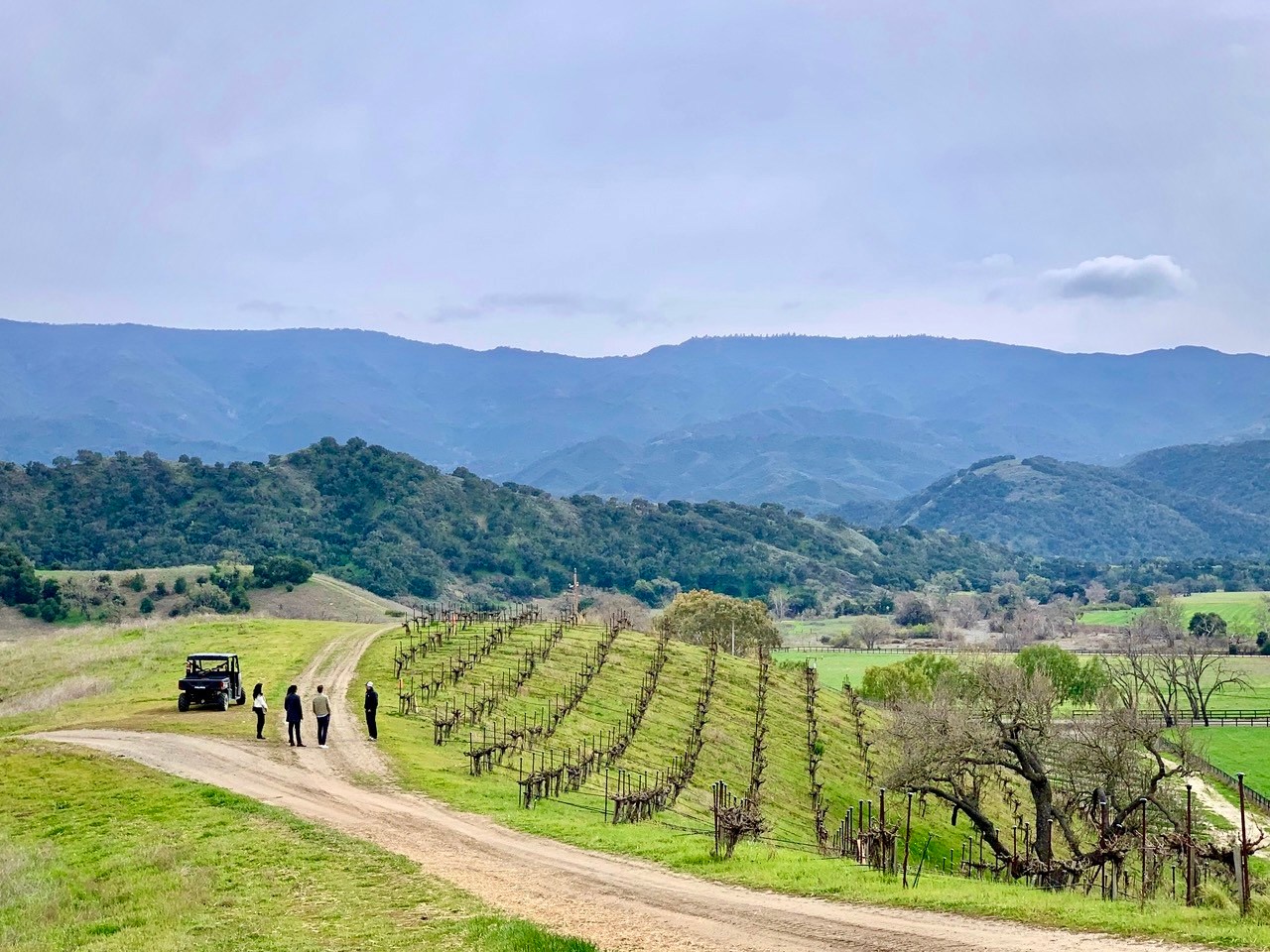
Santa Barbara County’s actual wine country sits about 40 to 45 minutes northeast of downtown. The Santa Ynez Valley, Sta. Rita Hills, Ballard Canyon, Los Olivos, and Happy Canyon all unfold across valleys framed by the only east-to-west mountain ranges on the Pacific Coast. That geography funnels cool ocean air inland and creates the conditions that make this region capable of growing 70+ grape varieties. It is a genuinely unique landscape.
Visitors who make the drive gain access to:
- Private estate vineyards not open to the general public
- Seated tastings with small-production winemakers
- Vineyard walks and behind-the-scenes production tours
- A slower pace with far fewer crowds
- The kind of scenery that actually looks like wine country
For anyone who treats wine as more than a casual hobby, or who wants a Santa Barbara wine experience that goes deeper than a fun afternoon of sipping, the 45-minute drive opens up a completely different world.
Guided tour companies that specialize in private, boutique vineyard experiences can handle the transportation, the planning, and the access to wineries that visitors would never find on their own.
A private wine tour through Santa Barbara’s estate vineyards pairs that kind of access with luxury transportation and a fully curated itinerary built around each guest’s preferences.
That combination of curation and convenience is tough to beat, especially for people visiting from out of town who don’t know the region well.
Can Visitors Do Both?
Absolutely. And honestly, that might be the best play. Many visitors spend a day on the urban wine trail in Santa Barbara exploring the Funk Zone and Presidio, then dedicate a second day to a guided vineyard tour through the valleys. The downtown trail serves as a great introduction to the region’s diversity, and the vineyard experience adds depth.
Two different days, two very different experiences, one incredible wine region.
FAQs
How many wineries are on the urban wine trail Santa Barbara?
The trail currently includes about 20 official member wineries, though the broader downtown area and surrounding neighborhoods have upwards of 30 tasting rooms within walking distance.
Is the urban wine trail free?
The trail itself has no entry fee. Individual tasting rooms charge between $15 and $35 per flight, and many waive the fee if visitors purchase two or three bottles.
Do visitors need reservations for the urban wine trail?
Most tasting rooms on the trail accept walk-ins, especially on weekdays. Weekend visits during peak season (summer and fall) can get crowded, so checking ahead with specific tasting rooms is a smart move.
How far is the urban wine trail from Santa Barbara’s actual vineyards?
The vineyards and estate wineries in the Santa Ynez Valley and Sta. Rita Hills sit roughly 40 to 45 minutes northeast of downtown Santa Barbara. The urban trail’s tasting rooms pour wines sourced from those regions but are located in the city itself.