What Makes the Foxen Canyon Wine Trail Different From Other Santa Barbara Routes?
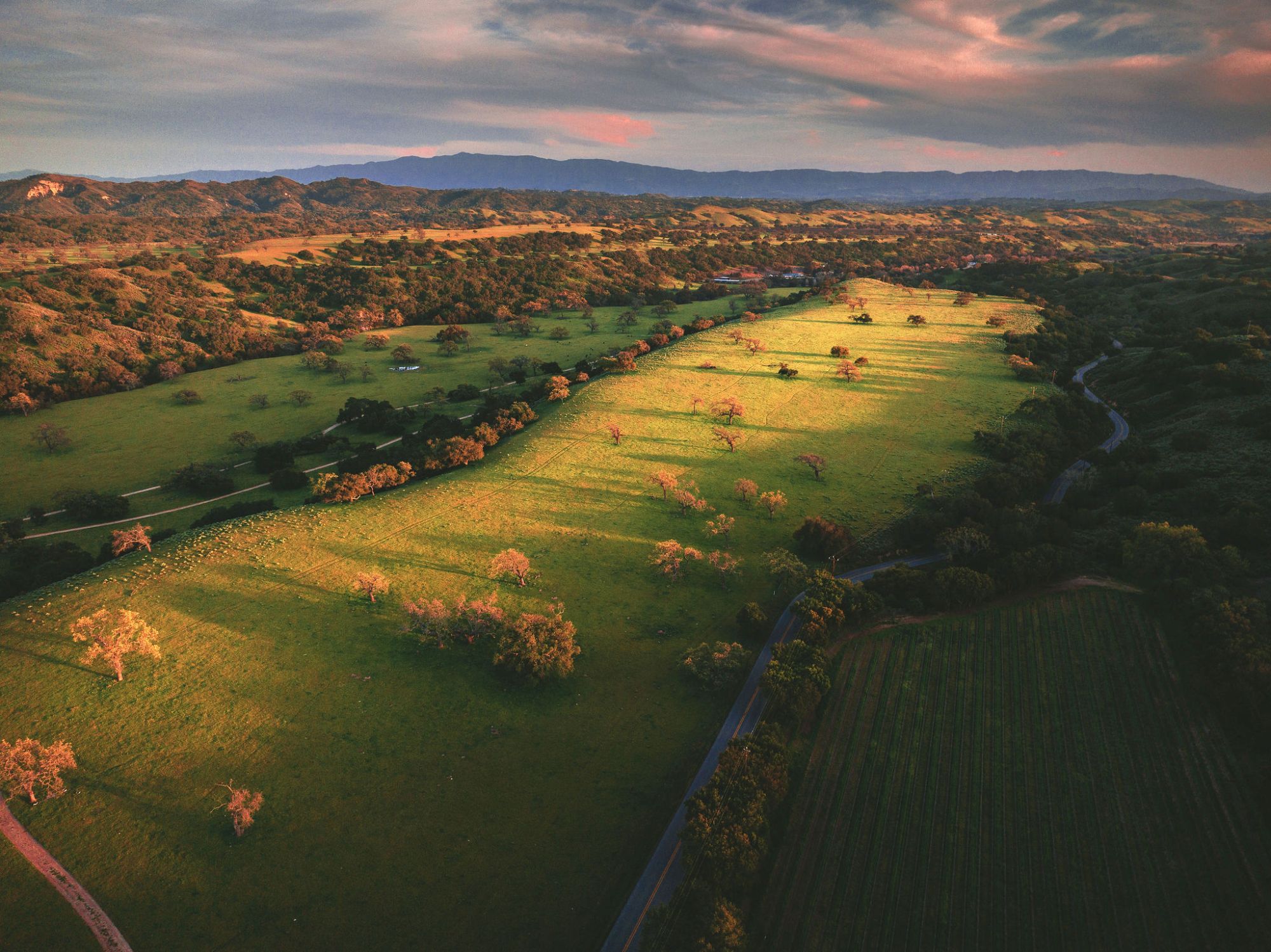
Quick answer: The Foxen Canyon Wine Trail is a 30-mile rural wine route connecting Los Olivos to Santa Maria, featuring 16 wineries that sit on actual vineyard estates rather than in converted warehouses or walkable town strips. It crosses two distinct climate zones in a single drive, produces both Rhône and Burgundy varietals, and remains one of the least crowded wine tasting corridors in all of Santa Barbara County.
Santa Barbara wine country gets a lot of attention. And it deserves it. But here’s the thing most visitors don’t realize until they’ve already burned half their day in the Funk Zone or standing elbow-to-elbow in a Los Olivos tasting room: not every wine route here delivers the same experience.
The Foxen Canyon Wine Trail is the route that serious wine lovers keep coming back to. Not because it’s flashy or trendy, but because it feels like the opposite of both. It is 30 miles of two-lane road, rolling hills, vineyards stretching toward the horizon, and tasting rooms where the person pouring the wine might also be the person who picked the grapes that morning.
That distinction matters. And it shapes every single part of the experience.
The Geography Sets It Apart Immediately
Most Santa Barbara wine routes are tied to a single AVA or clustered in a walkable downtown area. The Urban Wine Trail keeps visitors within about 13 blocks of the Funk Zone. Los Olivos is a charming little town, but the tasting rooms are storefronts on a main street. Los Olivos has its own appeal for walkable wine tasting, and it plays a completely different role in Santa Barbara’s wine scene. The Lompoc Wine Ghetto is literally an industrial park filled with small-production winemakers.
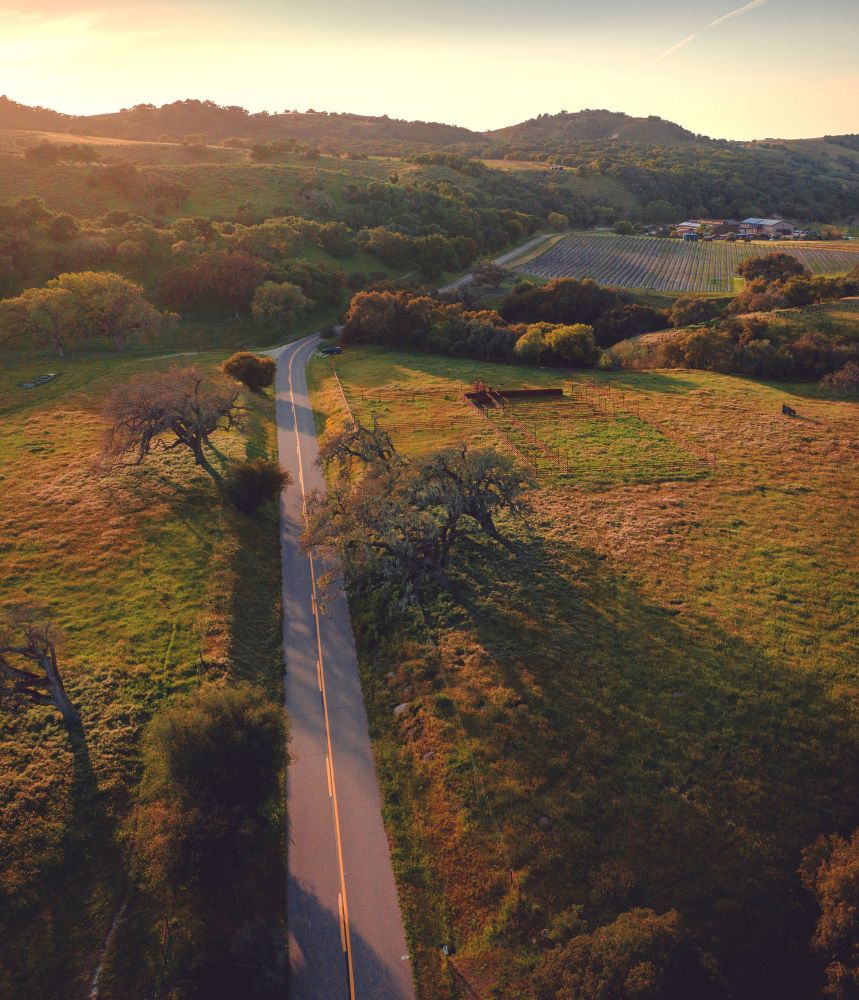
The Foxen Canyon Wine Trail does something entirely different. It physically stretches across 30 miles of countryside, winding from the rolling hills north of Los Olivos all the way to the farmland east of Santa Maria. Along the way, visitors cross through multiple microclimates and soil types, which is why the wines on this single trail can taste so dramatically different from one stop to the next.
Here’s where it gets interesting:
- Southern end (near Los Olivos): Warmer, more inland climate. This is where Rhône varieties thrive. Think bold Syrah, rich Grenache, fragrant Viognier
- Northern end (near Santa Maria): Cooler temperatures thanks to Pacific Ocean breezes funneling through the transverse valley. Pinot Noir and Chardonnay dominate here
That kind of varietal range on a single trail? You don’t get that on the Urban Wine Trail. You don’t get it in Ballard Canyon (which focuses almost entirely on Syrah). You barely get it anywhere else in the county.
Foxen Canyon Wine Trail vs Other Santa Barbara Routes
To really understand why this route stands apart, it helps to see the differences side by side.
| Feature | Foxen Canyon Wine Trail | Urban Wine Trail (Funk Zone) | Los Olivos Tasting Rooms | Lompoc Wine Ghetto |
| Setting | Rural vineyard estates | Downtown converted warehouses | Main street storefronts | Industrial park units |
| Number of stops | 16 wineries | 20+ tasting rooms | 15+ tasting rooms | 12+ tasting rooms |
| Crowd level | Low to moderate | High, especially weekends | Moderate to high | Low to moderate |
| Vineyard access | Most sit on actual vineyards | No vineyards on-site | No vineyards on-site | No vineyards on-site |
| Varietal range | Rhône and Burgundy varieties | Varies by producer | Varies by producer | Mostly Pinot and Chardonnay |
| Typical vibe | Laid-back, agricultural, personal | Urban, social, walkable | Charming small-town, retail | No-frills, production-focused |
That vineyard access column? That’s a bigger deal than most people think. Tasting wine in the Funk Zone is fun, sure. But tasting wine while looking at the actual vines those grapes came from changes the whole context. The terroir stops being an abstract concept on a menu card and becomes the literal dirt under the visitor’s feet.
Small Production, Big Quality
One of the quiet strengths of the Foxen Canyon Wine Trail is how many of its wineries operate at small or micro-production scale. These aren’t factories churning out thousands of cases for grocery store shelves. Places like Rancho Sisquoc, Dovecote, and Riverbench are making wines in limited quantities with hands-on methods.
And that small-batch approach connects directly to something else this trail does well: sustainability.
Sustainability Is Built Into the Land Here
This is where the Foxen Canyon Wine Trail story gets particularly compelling for anyone who cares about how their wine gets made.
Foxen Vineyard and Winery, the trail’s namesake, practices no-till farming across its estate vineyards. They’ve installed raptor perches throughout the property to invite hawks and owls that naturally control rodent populations, eliminating the need for chemical intervention. They’re SIP (Sustainability in Practice) certified and use solar power at their facilities.
And they’re not alone on this trail. Demetria Estate, located off Foxen Canyon Road, is fully committed to biodynamic farming. Visitors can see sheep grazing between the vine rows, a practice that manages cover crops and enriches soil without synthetic inputs.
Zaca Mesa was the first to plant Syrah in Santa Barbara County and has long championed sustainable growing methods. Fess Parker Winery has maintained over a hundred acres of estate vineyards along the trail for more than three decades.
This concentration of environmentally conscious winemaking in one corridor isn’t accidental. The rural setting of the Foxen Canyon Wine Trail lends itself to farming-first approaches. There’s space for cover crops. Room for biodiversity. No concrete sidewalks boxing in the vines.
For visitors who want their wine experience to align with their values around land stewardship and responsible agriculture, this trail delivers that in a way that an urban tasting room simply cannot replicate.
The History Runs Deep
The trail itself is named after Captain Benjamin Foxen, who purchased the historic Rancho Tinaquaic back in 1837. That’s a 9,000-acre Mexican land grant that eventually became the road and region visitors drive through today. Foxen Vineyard co-founder Dick Dore grew up on this very land, and his family connection to the canyon goes back generations.
That kind of multi-generational ranching and farming heritage shapes the culture of the entire trail. This isn’t a wine region that got invented by venture capital in the last decade. It has layers. Real ones.
What the Experience Actually Feels Like
Forget the polished, corporate winery atmosphere for a minute. On the Foxen Canyon Wine Trail, tasting often happens at a picnic table under an oak tree, or in a small barn that’s been converted into a tasting room. Dogs wander around. The parking lot is gravel. Someone’s kid might be doing homework in the corner while their parent pours Grenache for a table of four.
It sounds almost too simple. But that simplicity is precisely what creates a memorable, personal experience.
Most wineries along the trail offer picnic space, and many encourage visitors to pack food and spend the day. There are no velvet ropes, no dress codes, and very few places requiring advance reservations on a typical weekday.
The trail also hosts two annual passport events that are worth noting. The Summer Sipping Passport (usually in June or July) and Christmas on the Trail (typically in December) offer access to multiple participating wineries with a single passport ticket, including food pairings and live music.
Why This Matters for Planning a Wine Tour
Anyone planning a day of wine tasting in Santa Barbara County faces a genuine choice between very different types of experiences. The Funk Zone is great for a casual afternoon walk between bars and galleries. Los Olivos is perfect for a quick stop during a broader road trip.
But the Foxen Canyon Wine Trail is the route for people who want to slow down. Who wants to sit with a winemaker and ask questions about their soil, their harvest, their farming philosophy. That kind of personal, unhurried access is exactly what defines a private wine tasting experience in Santa Barbara, and the Foxen Canyon corridor is one of the best places to find it. Who want to see where the wine actually comes from.
That’s a different kind of day. And for visitors who are drawn to sustainable, small-production, estate-grown wines with real stories behind them, this trail consistently delivers something the other routes don’t.
FAQs
How many wineries are on the Foxen Canyon Wine Trail?
The trail features 16 wineries and tasting rooms spread across 30 miles of Foxen Canyon Road, running from Los Olivos in the south to Santa Maria in the north.
What types of wine are produced along the Foxen Canyon Wine Trail?
The trail produces both Rhône and Burgundy varieties. The warmer southern end grows Syrah, Grenache, and Viognier, while the cooler northern section (closer to the Pacific) produces Pinot Noir and Chardonnay. Other varieties like Cabernet Franc, Sangiovese, and Chenin Blanc can also be found.
Is the Foxen Canyon Wine Trail crowded?
Generally, no. Compared to the Funk Zone or Los Olivos, foot traffic and crowds are noticeably lighter. Weekdays are especially quiet, and even weekends tend to feel relaxed. Reservations are recommended during passport events but are often optional on regular days.
Are there sustainable or organic wineries on the Foxen Canyon Wine Trail?
Yes. Several wineries on the trail practice sustainable, organic, or biodynamic farming. Foxen Vineyard is SIP certified and uses no-till farming and solar power. Demetria Estate follows biodynamic principles. Many other producers along the trail prioritize low-intervention, environmentally responsible winemaking.